RAC Rally 2023: A Comprehensive Route Overview
The 2023 Roger Albert Clark Rally, spanning November 23rd to 27th, boasts an impressive 350 stage miles across England, Scotland, and Wales, demanding exceptional driver skill.
The 2023 RAC Rally, officially known as the Roger Albert Clark Rally, represents a significant challenge for competitors, traversing diverse terrains across the United Kingdom. This historic event, running from November 23rd to 27th, 2023, promises a grueling test of both driver skill and vehicle reliability. The rally’s expansive route encompasses approximately 350 stage miles, winding through the forests of England, Scotland, and Wales.
Preparation is paramount, and understanding the route is crucial for success. Competitors will face a demanding schedule, requiring meticulous planning and precise navigation. The rally’s format emphasizes endurance and adaptability, with stages varying significantly in character. The culmination of the event includes the challenging “Big One” stage in the Pundershaw region of Kielder Forest, Northumberland, a substantial 39.22-mile stretch.
Historical Significance of the RAC Rally
The RAC Rally boasts a rich and storied history, evolving from its origins as a reliability trial to become a cornerstone of the World Rally Championship. Originally conceived as a test of vehicle durability, the rally quickly gained prominence for its demanding stages and challenging conditions. Throughout the decades, it has attracted legendary drivers and manufacturers, witnessing countless iconic moments in motorsport history.
The rally’s legacy is deeply intertwined with the British motorsport landscape, serving as a proving ground for innovation and a showcase for driver talent; The 2023 Roger Albert Clark Rally continues this tradition, honoring the spirit of the original event while embracing modern rally technology. With 350 stage miles planned across England, Scotland, and Wales, including the formidable 39.22-mile Pundershaw stage, it upholds the rally’s reputation for difficulty.
Overview of the 2023 Event Format

The 2023 Roger Albert Clark Rally, running from November 23rd to 27th, adopts a classic rally format, emphasizing endurance and navigational skill. Competitors will face a grueling schedule encompassing diverse terrains across England, Scotland, and Wales. The event is structured over five demanding days, each presenting unique challenges to both drivers and machines.
This year’s rally features a substantial 350 stage miles, designed to test the limits of both man and machine. A key highlight is “The Big One” – the 39.22-mile Pundershaw stage in Kielder Forest, Northumberland – a testament to the rally’s commitment to challenging stages; The format prioritizes long, flowing stages, mirroring the spirit of historic rallies, while incorporating modern safety standards and logistical considerations. Successful completion demands meticulous preparation, strategic tire management, and unwavering driver focus.
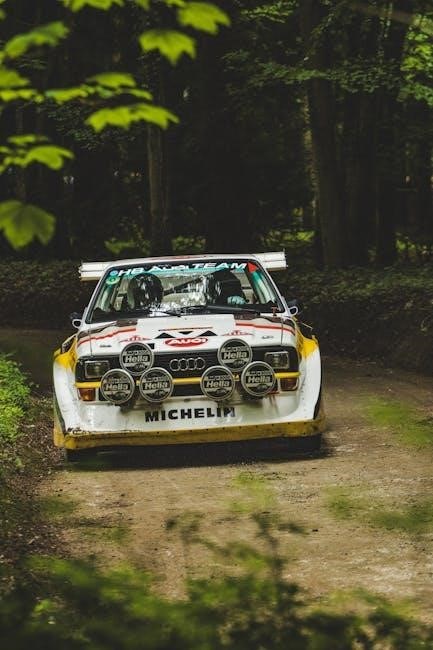
Detailed Route Breakdown – Stages & Locations
The rally’s 350 stage miles traverse England, Scotland, and Wales, featuring iconic forests like Kielder and Dyfi, demanding precision and adaptability from all competitors.
Day 1: Initial Stages & Challenges
Day one of the 2023 Roger Albert Clark Rally immediately plunges competitors into a demanding test of car and driver. The opening stages, primarily located in England, serve as a crucial shakedown and qualifying element. Expect fast, flowing forest tracks initially, often mixed with unpredictable surfaces – gravel giving way to loose sand or even damp patches.
Navigational accuracy is paramount from the outset, as deceptively similar junctions can easily lead to time loss. Mechanical sympathy will also be key; pushing too hard too soon risks damaging components before the rally truly gets underway. The initial stages are designed to sort the contenders from the pretenders, establishing an early pecking order.
Competitors must quickly adapt to varying grip levels and optimize their setups for these diverse conditions. Successful completion of day one requires a blend of speed, precision, and a calculated approach to risk management, setting the tone for the remaining stages.
Day 2: Navigational Complexity & Forest Roads
Day two of the Roger Albert Clark Rally significantly ramps up the difficulty, transitioning into more complex forest roads across both England and Scotland. This stage is characterized by intricate junctions and challenging navigation, demanding absolute focus from both driver and co-driver. The forests present a mix of narrow, twisting tracks and wider, faster sections, requiring adaptable driving styles.
Expect frequent changes in road surface, from hard-packed gravel to loose, rutted terrain. Accurate pace notes are crucial, as hidden obstacles and deceptive corners abound. Maintaining momentum is key, but overconfidence can quickly lead to errors. The Scottish stages often feature unpredictable weather, adding another layer of complexity.
Successful navigation and consistent stage times are vital for maintaining position. Day two serves as a true test of teamwork and adaptability, separating those who can thrive under pressure from those who falter.
Day 3: The “Big One” – Pundershaw Stage Analysis
Day three centers around the iconic Pundershaw stage, located within Kielder Forest in Northumberland. This 39.22-mile behemoth, dubbed “The Big One,” represents a significant challenge for competitors in the Roger Albert Clark Rally. Its length demands exceptional endurance from both driver and machine, with minimal opportunity for respite.
Pundershaw is renowned for its fast, flowing sections interspersed with tight, technical corners and demanding crests. The forest roads are often rough and unforgiving, placing a premium on robust suspension and precise driving. Maintaining a consistent rhythm is crucial, but the stage’s length necessitates careful tire management.
Strategic planning and accurate pace notes are paramount for success. The sheer scale of Pundershaw means any mistake can be costly, potentially leading to significant time loss or even retirement. It’s a true test of skill, stamina, and mechanical reliability.
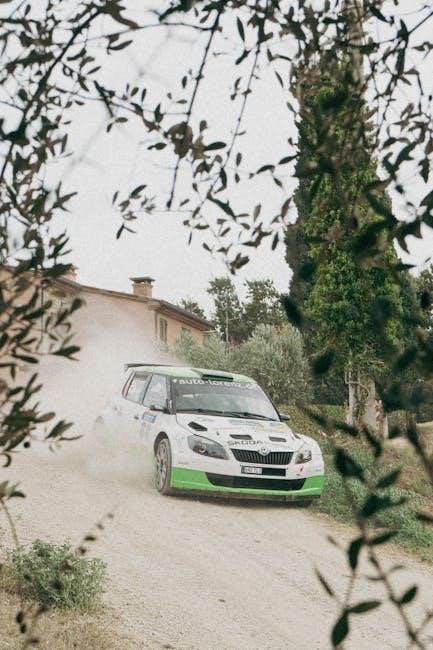
Day 4: Scottish Stages – Terrain & Difficulty
The fourth day of the rally transitions into Scotland, presenting a distinct change in terrain and a fresh set of challenges for the crews. Scottish stages are typically characterized by narrower, more winding roads than those found in England and Wales, demanding exceptional precision and car control.
Expect frequent changes in road surface, ranging from hard-packed gravel to loose, rocky sections. The landscape often features undulating hills and blind crests, requiring drivers to rely heavily on their co-drivers for accurate pace notes. Weather conditions in Scotland can be notoriously unpredictable, adding another layer of complexity.
Navigational accuracy is crucial, as the stages can be intricate and easily lead to errors. Maintaining momentum is key, but drivers must also be prepared to adapt to the ever-changing conditions and the demanding nature of the Scottish forests.
Day 5: Welsh Stages – Final Push & Conditions
The final day of the 2023 rally plunges competitors into the challenging Welsh stages, a notorious proving ground for rally drivers. These stages are renowned for their technical complexity, featuring narrow lanes, tight corners, and frequent changes in elevation. Expect a relentless test of both driver skill and mechanical endurance.
Welsh forests often present a slick, muddy surface, particularly if wet weather prevails. This demands careful tire management and a precise driving style to avoid losing valuable time. Visibility can be limited due to the dense tree cover and potential for mist or fog, increasing the risk of errors.
The Welsh stages represent a final, grueling push for the finish line, where consistency and avoiding mechanical issues are paramount. Crews must balance speed with caution, knowing that a single mistake could jeopardize their hard-earned results.
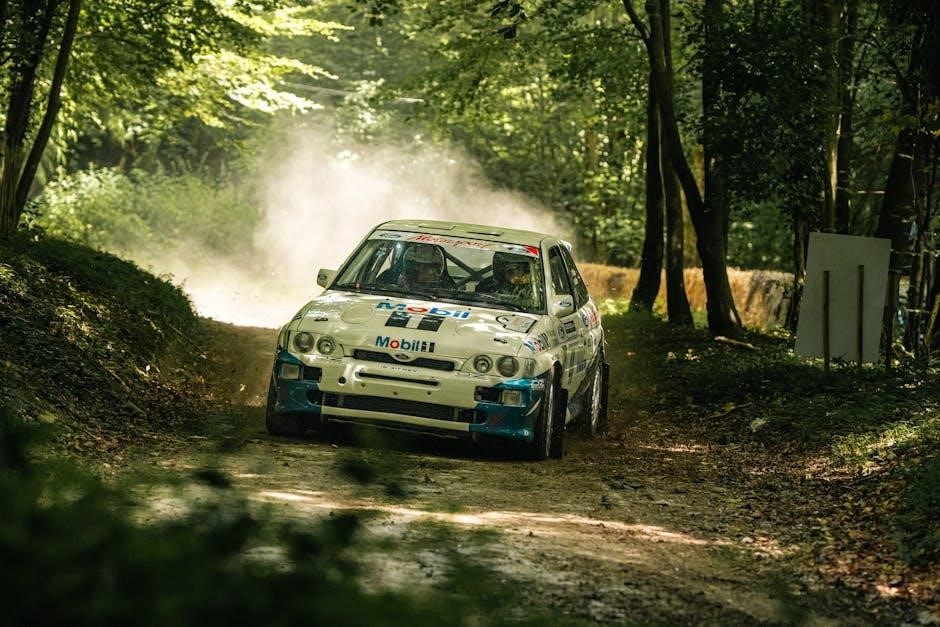
Key Stages & Special Sections
Iconic stages like Pundershaw, Grange Rhydding, and Dyfi Forest will test drivers with unique terrain and technical demands throughout the rally’s demanding course.
Pundershaw Stage (Kielder Forest) – Detailed Map Analysis
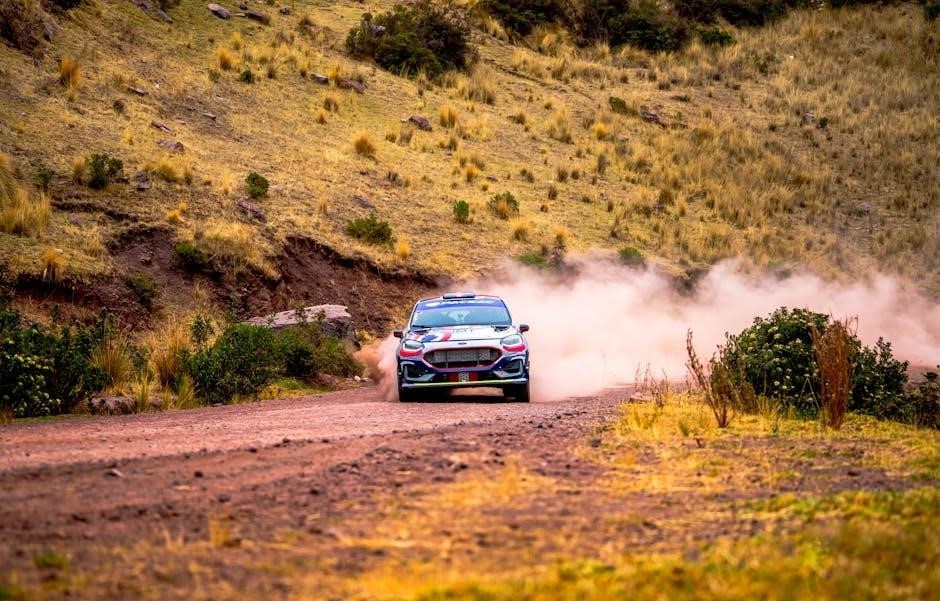
Pundershaw, nestled within Kielder Forest in Northumberland, represents a significant challenge for competitors in the 2023 rally. This stage, measuring 39.22 miles, is renowned as “The Big One” due to its length and demanding nature. A detailed map analysis reveals a complex network of forest tracks, characterized by fast, flowing sections interspersed with tight, technical corners.
Contour lines indicate substantial elevation changes, requiring precise braking and throttle control. The route features numerous blind crests and deceptive cambers, demanding exceptional driver confidence and accurate pace notes. Expect varied surface conditions, ranging from hard-packed gravel to loose, sandy sections, particularly after rainfall.
Strategic tire management will be crucial, as abrasive surfaces can lead to rapid degradation. The stage’s length necessitates careful consideration of fuel consumption and mechanical reliability. Competitors must balance speed with preservation to successfully navigate this grueling test of skill and endurance.
Grange Rhydding Stage – Characteristics & Challenges
While specific details regarding the Grange Rhydding stage aren’t explicitly detailed in the provided information, we can infer its characteristics based on the overall rally profile. As part of the broader 350 stage mile event spanning England, Scotland, and Wales, Grange Rhydding likely presents a unique set of challenges. Expect a mix of open forest roads and narrower, more technical sections.
Given the rally’s emphasis on navigating diverse terrains, Grange Rhydding will likely test drivers’ adaptability. Surface conditions could vary significantly, demanding precise car control and strategic tire choices. The stage’s layout will probably incorporate challenging corners, requiring accurate braking points and smooth lines.
Competitors must anticipate unpredictable weather conditions, which can dramatically alter grip levels. Successful navigation of Grange Rhydding will depend on a combination of speed, precision, and a thorough understanding of the stage’s nuances.
Dyfi Forest Stages – Technical Aspects
Although detailed specifics concerning the Dyfi Forest Stages aren’t directly available within the provided context, we can deduce certain technical aspects based on the rally’s overall nature; As an integral part of the extensive 350 stage mile Roger Albert Clark Rally, traversing England, Scotland, and Wales, Dyfi Forest will undoubtedly present a demanding test for competitors.
Expect narrow, winding tracks carved into the Welsh woodland, demanding exceptional precision and car control. The stages will likely feature frequent changes in elevation and camber, requiring drivers to constantly adjust their lines. Surface conditions will likely be variable, ranging from loose gravel to hard-packed dirt, influenced by weather.
Successful completion of Dyfi Forest will hinge on accurate pace notes, a well-prepared vehicle, and the ability to maintain momentum through challenging terrain. It’s a stage where technical skill and composure are paramount.
Sweet Lamb Stage – Spectator Points & Route Features
While specific details regarding spectator points for the Sweet Lamb stage aren’t directly available, its reputation within the Roger Albert Clark Rally suggests it’s a popular location for fans. As part of the rally’s 350 stage miles across England, Scotland, and Wales, Sweet Lamb is known for offering accessible viewing opportunities.
Expect a fast, flowing stage characterized by wide, sweeping corners and challenging crests. The terrain is typically hard-packed gravel, providing good grip but demanding commitment from drivers. Route features likely include natural jumps and compressions, adding to the spectacle.
Spectator areas are usually designated in safe locations, offering clear views of the action. Attendees should anticipate large crowds and adhere to all safety guidelines provided by rally officials. Sweet Lamb consistently delivers thrilling rally action.
Epynt Stages – Military Land & Unique Terrain
The Epynt stages, run on Ministry of Defence land in Wales, present a truly unique challenge within the 350 stage miles of the Roger Albert Clark Rally. Access is granted specifically for the event, making it a rare opportunity to witness rallying on this terrain.
Expect a demanding course characterized by fast, open roads intersected by tight, technical sections. The surface is often abrasive gravel, with potential for hidden rocks and uneven cambers. The military land’s undulating landscape creates blind crests and challenging corner combinations.
Epynt demands precision and adaptability from drivers, as conditions can change rapidly. Spectator access is typically controlled, with designated viewing areas offering safe vantage points. The stages are renowned for their scenic beauty and thrilling rally action.

Route Map & Resources
Official 2023 route maps (PDF) are crucial for navigating the 350 stage miles. Online tracking and apps will provide stage timings and spectator access details.
Availability of Official 2023 Route Maps (PDF)
Securing access to the official 2023 RAC Rally route maps in PDF format is paramount for competitors, teams, and dedicated rally followers alike. These detailed maps, encompassing the extensive 350 stage miles across England, Scotland, and Wales, are essential for strategic planning and safe navigation.
Typically, the organizing committee releases these maps digitally through the official rally website closer to the event date – November 23rd to 27th in 2023. Expect a dedicated section within the site for competitor resources, where the downloadable PDF files will be hosted.
These maps aren’t merely geographical representations; they include crucial information such as stage start and finish points, hazard warnings, spectator access zones, and service park locations. Competitors rely on these details for pace note creation and overall race strategy. Availability may require registration or a fee, so checking the official website frequently is advised.
Online Rally Tracking & Stage Timings
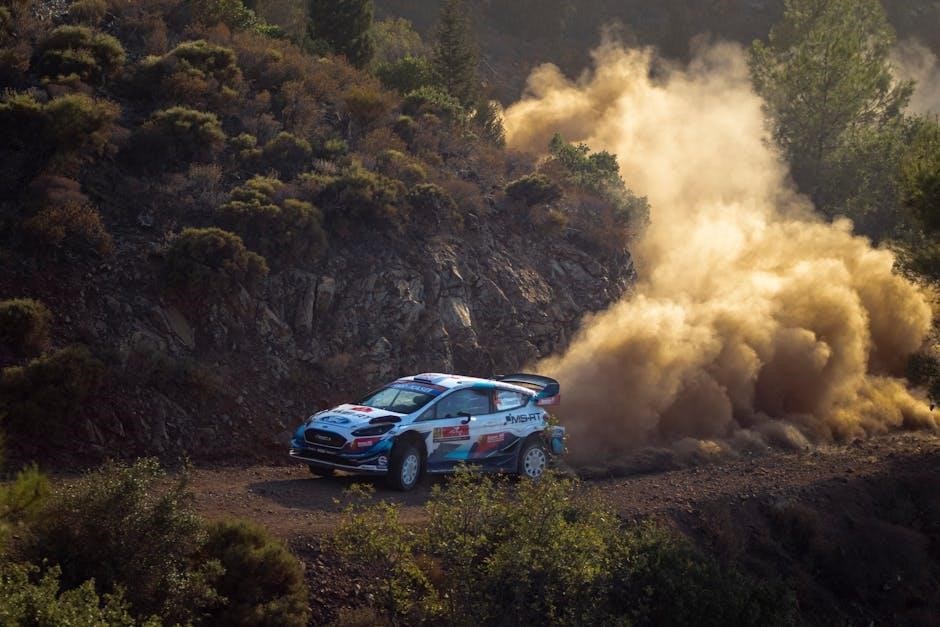
Following the 350 stage miles of the 2023 Roger Albert Clark Rally (November 23rd-27th) requires robust online tracking systems. Several platforms provide real-time updates on competitor positions, stage times, and overall rally standings. Official rally websites usually integrate live timing feeds, allowing spectators to monitor progress throughout the event.
Dedicated rally tracking websites and mobile applications often supplement this, offering enhanced features like map views displaying car locations, split times at various checkpoints, and historical data analysis. These tools are invaluable for those unable to attend in person, providing a dynamic and immersive experience.
Stage timings, crucial for both competitors and fans, are typically published in advance on the official rally website and updated live during the event. Accessing these resources ensures you won’t miss a moment of the action across the challenging terrains of England, Scotland, and Wales.
Spectator Information & Access Points
The 2023 Roger Albert Clark Rally, encompassing 350 stage miles from November 23rd to 27th, offers limited but exciting spectator opportunities. Access to stages is carefully managed to ensure safety and minimize disruption to the competition. Official rally programs and websites detail designated spectator areas, often located at vantage points offering good views of the action.
These areas typically involve a short walk from designated parking zones, so appropriate footwear is essential. Spectators should adhere strictly to marshal instructions and remain within marked boundaries. Detailed maps, often available online or at the event, highlight these access points and parking facilities.
Remember to check the official rally website for any last-minute changes or restrictions regarding spectator access, particularly concerning weather conditions or stage modifications. Prior planning is key to a safe and enjoyable rally experience.
Digital Rally Route Apps & Tools
Following the 350 stage miles of the 2023 Roger Albert Clark Rally (November 23rd-27th), several digital resources enhance the spectator and enthusiast experience. While a dedicated official app isn’t always available, rally tracking websites provide real-time competitor positioning and stage timings. These platforms often feature interactive maps displaying the rally route and current standings.
Third-party rally apps, frequently updated by dedicated fans, may offer downloadable route maps and stage information. These can be invaluable for planning spectator visits and understanding the rally’s geographical scope.
However, reliance on digital tools should be tempered with official rally program information. Ensure any downloaded maps are current and verify timings with the official rally website to avoid missing key moments or encountering unexpected route changes.
Rally Logistics & Considerations
The 2023 rally, covering 350 stage miles, requires careful planning for spectators and teams alike, considering the vast geographical spread across three countries.
Service Park Locations & Access
Strategic service park locations are crucial for maintaining rally vehicles throughout the demanding 2023 Roger Albert Clark Rally. These hubs, spread across England, Scotland, and Wales, provide essential repair and maintenance facilities for competing teams. Access to these service parks is typically restricted to authorized personnel – team members, officials, and accredited media – ensuring a secure and efficient working environment.
Detailed information regarding specific service park locations, opening and closing times, and access procedures will be published in the official rally documentation, including the event program and competitor briefings. Spectators generally do not have access to the service parks due to safety regulations and the need to maintain operational efficiency. However, designated viewing areas may be established near service park entrances, offering glimpses of the intense activity. It’s vital to consult the official rally website and documentation for the most up-to-date information regarding service park access and viewing opportunities.
Weather Conditions & Impact on Route
November’s unpredictable weather significantly impacts the 2023 Roger Albert Clark Rally, spanning forests across England, Scotland, and Wales. Competitors must prepare for a wide range of conditions, from dry and dusty stages to torrential rain, snow, and ice – all potentially within the same day. These fluctuating conditions dramatically alter grip levels, demanding adaptable driving strategies and tire choices.
Wet weather transforms forest roads into slippery, muddy tracks, increasing the risk of aquaplaning and reducing visibility. Conversely, freezing temperatures can create treacherous icy patches. Rally organizers closely monitor weather forecasts and may adjust stage schedules or implement safety measures, such as reduced speeds, if conditions become excessively hazardous. Teams meticulously analyze weather data to optimize tire selection and vehicle setup, recognizing that adapting to the elements is paramount to success in this challenging rally.
Vehicle Regulations & Technical Scrutineering
The 2023 Roger Albert Clark Rally enforces stringent vehicle regulations, ensuring both competitor safety and fair competition. These regulations cover a broad spectrum, including engine specifications, safety equipment, and vehicle modifications. All competing cars undergo rigorous technical scrutineering before the event, meticulously inspected by qualified officials.
Scrutineering focuses on verifying compliance with the rally’s technical rules, checking critical components like roll cages, safety harnesses, fire suppression systems, and braking mechanisms. Modifications must adhere to approved homologation forms. Any vehicle failing scrutineering is prohibited from starting until the issues are rectified. This process guarantees that all cars meet minimum safety standards and prevents unfair advantages gained through illegal modifications, contributing to a secure and equitable rally environment for all participants.
Safety Precautions for Spectators
Attending the 2023 Roger Albert Clark Rally offers an exhilarating experience, but spectator safety is paramount. The rally traverses challenging terrain at high speeds, demanding strict adherence to safety guidelines. Spectators must remain within designated viewing areas, clearly marked and separated from the racing line. Never cross the road or attempt to approach the track while stages are live.
Pay close attention to marshals’ instructions and warning flags. Wear bright clothing for visibility and sturdy footwear. Be aware of flying debris and maintain a safe distance from the vehicles. Avoid standing on banks or near trees that could pose a hazard. Responsible behavior ensures a safe and enjoyable rally experience for everyone involved, protecting both spectators and competitors alike. Prioritize safety and respect the event’s regulations.
Post-Rally Analysis & Results
Following the conclusion of the 2023 Roger Albert Clark Rally, a comprehensive analysis of the event will be undertaken. This includes scrutinizing stage times, competitor performance, and the impact of the challenging 350 stage miles across England, Scotland, and Wales. Detailed results, showcasing final standings and class winners, will be published on the official Motorsport UK website and rally-specific news platforms.
Experts will dissect key moments, focusing on the demanding Pundershaw stage in Kielder Forest – a significant 39.22-mile test of endurance and skill. The analysis will also consider the influence of weather conditions and vehicle reliability on the overall outcome. Post-rally reports will provide valuable insights for competitors and enthusiasts alike, contributing to the ongoing evolution of this historic rally event.
0 Comments